What is IPTV and how does it work?

Are you tired of traditional TV broadcasting methods? Looking for a more flexible way to enjoy your favorite shows and movies? Imagine being able to watch any content, anywhere, at any time. This is made possible by a technology known as Internet Protocol Television.
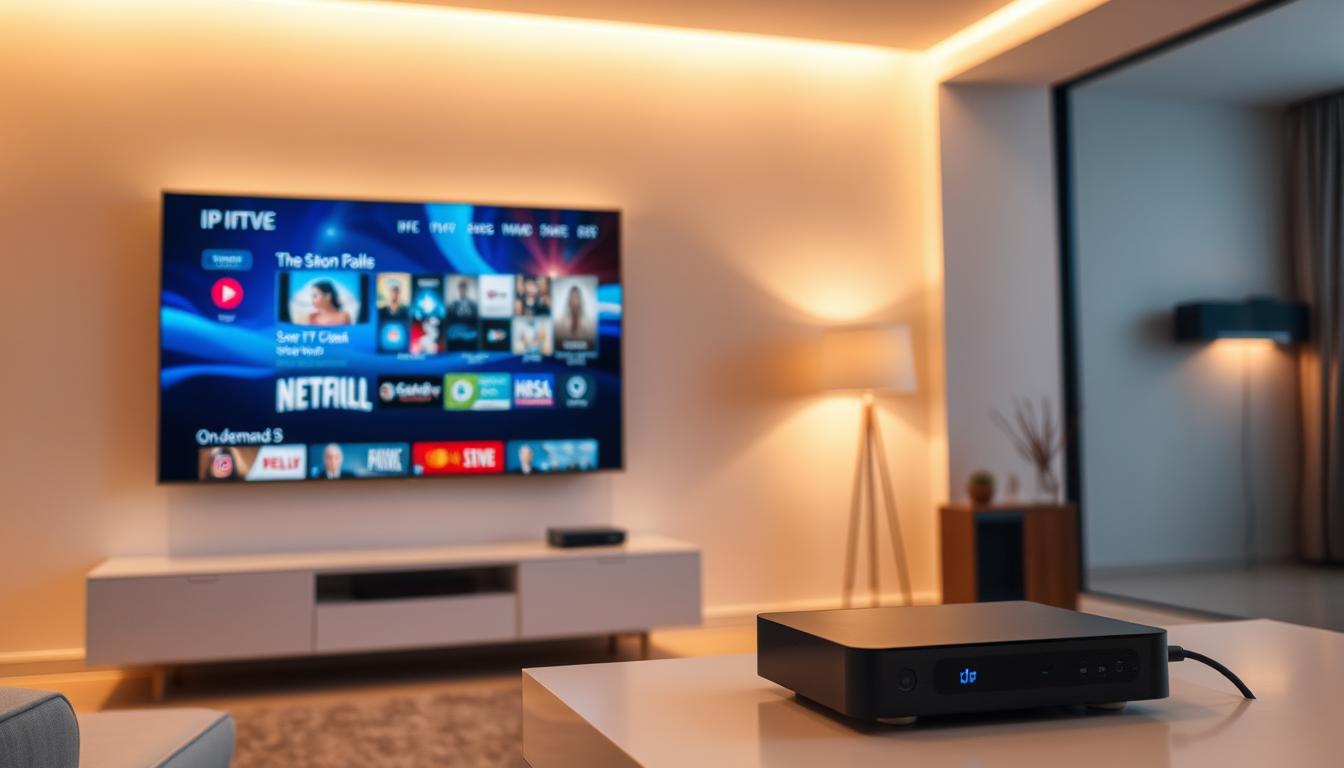
Internet Protocol Television, or IPTV, delivers television content over the internet. It allows for streaming services that are more personalized and interactive. Unlike traditional TV, IPTV uses your internet connection to stream content directly to your device. This provides a more flexible viewing experience.
Key Takeaways
- IPTV stands for Internet Protocol Television, a technology that streams TV content over the internet.
- It offers a more personalized and interactive viewing experience.
- IPTV uses your internet connection to deliver content directly to your device.
- This technology allows for flexible viewing, enabling you to watch content anywhere, anytime.
- IPTV is revolutionizing the way we consume television content.
Understanding IPTV Technology
IPTV technology is key in today’s digital world. It’s a big change in how we watch TV.
The Definition of IPTV
IPTV sends TV shows over the internet. This makes watching TV more personal and fun. It’s different from old TV, which uses satellite or cable.
IPTV uses internet protocol to stream shows right to your device.
How IPTV Differs from Traditional Television
IPTV and old TV have big differences. The main one is how they send signals.
Old TV uses satellite or cable. IPTV sends content over the internet.
Transmission Methods
IPTV’s way of sending signals is more flexible. It uses broadband internet. This lets users watch lots of channels and shows anytime.
User Experience Differences
Watching IPTV is more interactive and tailored to you. IPTV services have cool features like video-on-demand and catch-up TV. You can also watch shows on different devices.
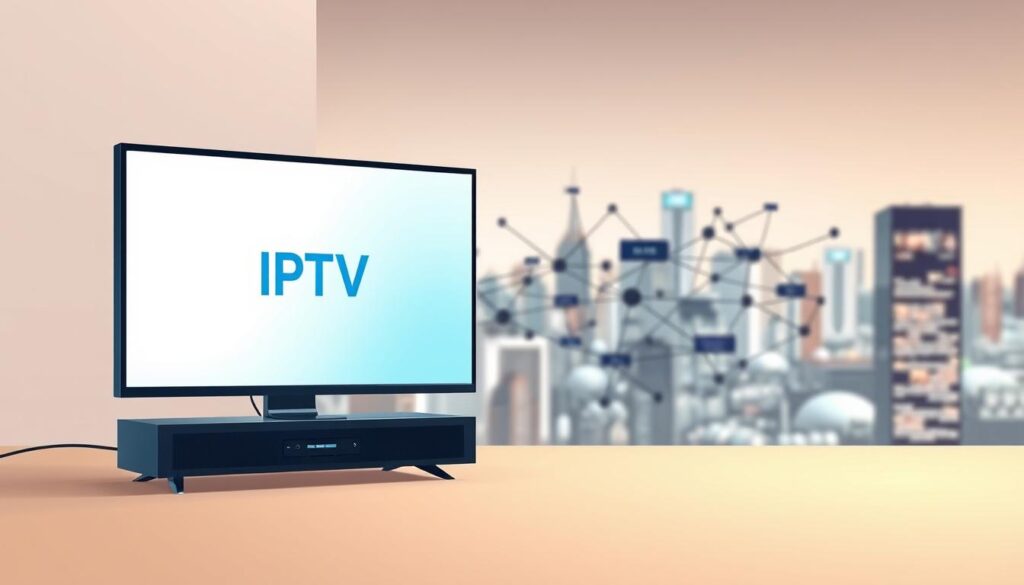
In short, IPTV is a better, more interactive choice than old TV. It uses the internet to give a better viewing experience.
The Technical Foundation of IPTV
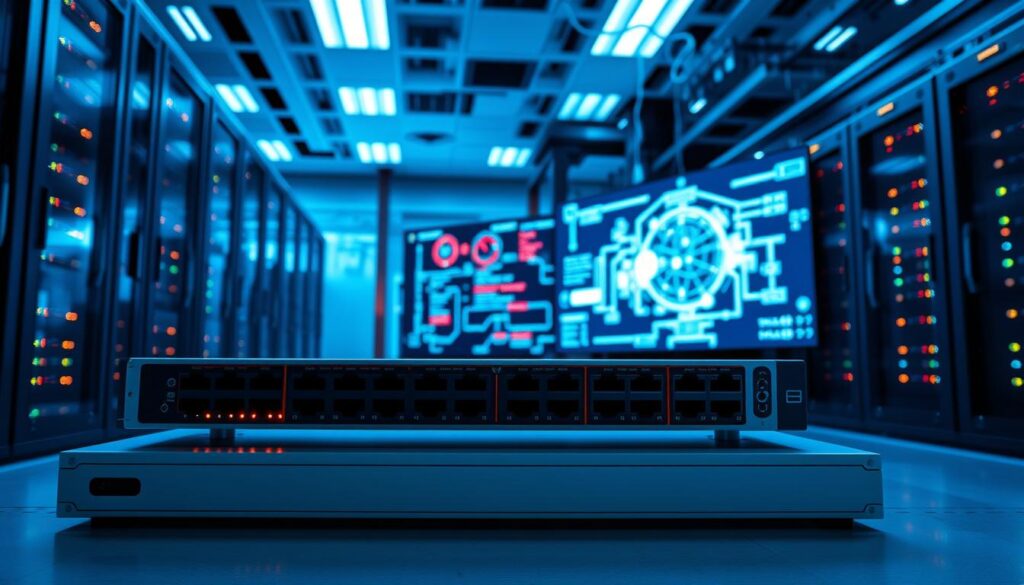
IPTV services rely on a solid technical base. This includes internet protocol, video streaming protocols, and content delivery networks. These elements work together to provide high-quality video streaming and reliable content delivery.
Internet Protocol Basics
Internet Protocol (IP) is key for sending data packets over the internet. IPTV uses IP to stream TV content to users. IP-based delivery offers more flexibility and scalability than traditional TV broadcasting.
Video Streaming Protocols
Video streaming protocols are essential for IPTV. They decide how video content is sent over the internet. Several important protocols are used in IPTV streaming.
UDP vs. TCP Streaming
IPTV often uses User Datagram Protocol (UDP) for streaming. UDP focuses on speed, which is good for live video. On the other hand, Transmission Control Protocol (TCP) is more reliable but can cause delays due to error-checking.
Adaptive Bitrate Streaming
Adaptive Bitrate Streaming (ABS) adjusts video quality based on internet speed. ABS makes sure the video plays smoothly by changing bitrates as needed.
Content Delivery Networks (CDNs)
Content Delivery Networks (CDNs) are crucial for IPTV. They store content in many places around the world. This cuts down on latency and boosts video quality by reducing the distance to the viewer.
| Technical Component | Description | Benefit |
|---|---|---|
| Internet Protocol (IP) | Fundamental protocol for data delivery | Flexibility and Scalability |
| UDP Streaming | Protocol for real-time video transmission | Low Latency |
| Adaptive Bitrate Streaming (ABS) | Technology for adjusting video quality | Smooth Viewing Experience |
| Content Delivery Networks (CDNs) | Caching content at multiple locations | Reduced Latency and Improved Quality |
Types of IPTV Services
IPTV technology supports many service types. This makes watching TV more flexible and customizable. It’s a big plus over traditional TV services.
Video on Demand (VOD)
VOD lets users watch content whenever they want. You can find movies, TV shows, and documentaries. VOD is great because it’s flexible. You can pause, rewind, or fast-forward as you like.
Live IPTV Broadcasting
Live IPTV broadcasting sends TV channels live over the internet. It’s perfect for watching live events, news, and sports. It’s a good alternative to traditional TV. Plus, you can watch it on many devices.
Time-Shifted Media
Time-shifted media lets you watch content when it’s convenient for you. You don’t have to stick to a schedule.
Catch-up TV
Catch-up TV lets you watch shows you missed. So, you can catch up on your favorite programs.
Start-over TV
Start-over TV lets you restart a live program from the start. It gives you more control over what you watch.
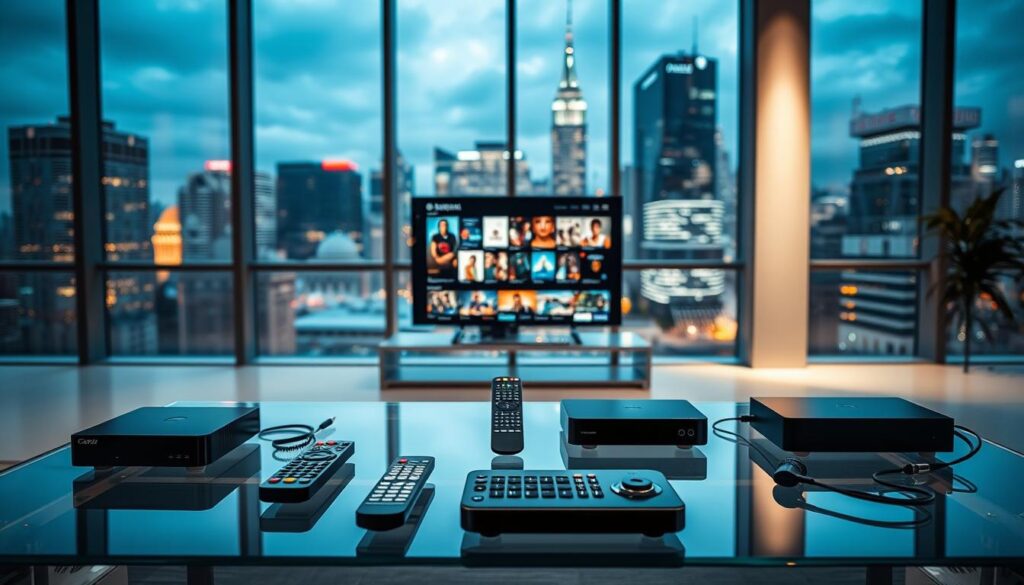
These services make IPTV better. They offer a variety of options to fit what you like to watch.
Essential IPTV Equipment
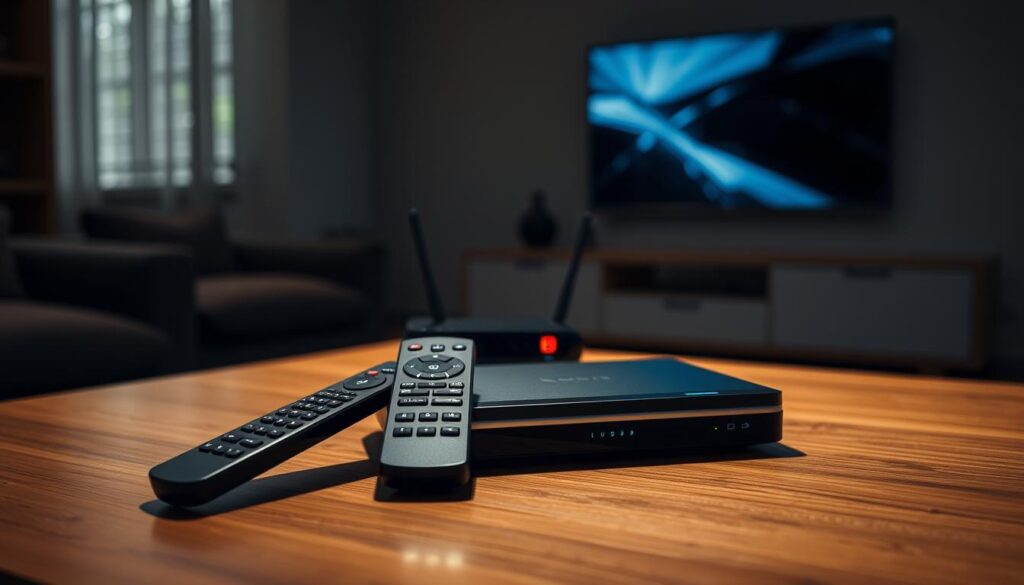
Knowing what equipment you need for IPTV is key for a great viewing experience. IPTV services need specific devices to stream high-quality content.
Set-Top Boxes
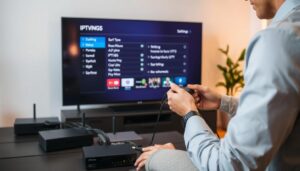
Set-top boxes are a top pick for IPTV. They plug into your TV and let you access many IPTV services. Brands like Magicon and Formuler are popular. Look for boxes with strong processing power and storage capacity.
Smart TVs with IPTV Capabilities
Many smart TVs today have built-in IPTV features. This means you don’t need extra devices. Brands like Samsung and LG offer these TVs. Make sure your TV supports IPTV before buying.
Mobile Devices and IPTV Apps
You can also watch IPTV on mobile devices with special apps. This lets you watch your favorite shows anywhere. Apps for both iOS and Android devices are available.
IPTV Middleware Solutions
IPTV middleware solutions help manage and deliver IPTV content. They let you organize content and customize the user interface. Providers like Minerva and SoftAtHome are well-known.
Choosing the right IPTV equipment ensures a smooth and enjoyable viewing experience.
IPTV vs. Cable and Satellite Television
IPTV is a new player in the TV market, competing with cable and satellite TV. It’s important to know how they differ to find the best service.
Cost Comparison
Cost is a big factor for viewers. IPTV is often cheaper and more flexible than cable or satellite TV. IPTV lets you pick what you want, which can save money.
Cost Breakdown:
| Service | Average Monthly Cost | Contract Requirements |
|---|---|---|
| IPTV | $20-$50 | No contract or flexible contracts |
| Cable TV | $50-$100 | Typically 1-2 years |
| Satellite TV | $50-$150 | Typically 1-2 years |
Content Availability Differences
IPTV offers a wide range of channels and on-demand content, including international options. Cable TV is great for local channels and sports. Satellite TV has a broad range of channels, including some not on cable.
Content Comparison:
- IPTV: Wide range of channels, on-demand content, and international channels.
- Cable TV: Strong local channel offerings, sports packages.
- Satellite TV: Broad channel range, some exclusive channels.
Technical Advantages and Limitations
IPTV needs a good internet connection, which can be a problem in some areas. Cable TV is usually reliable but can have outages. Satellite TV signals can get disrupted by weather.
Installation Requirements
IPTV needs a device and internet. Cable TV requires a physical connection and a set-top box. Satellite TV needs a dish installed at your home.
Installation Summary:
- IPTV: Internet connection and compatible device.
- Cable TV: Physical cable connection and set-top box.
- Satellite TV: Satellite dish installation.
Benefits of Using IPTV
IPTV is changing how we watch TV, offering many benefits over old TV services. It gives users a lot of flexibility.
Content Flexibility and Customization
IPTV lets users pick from a wide range of channels and content. This personalization is different from traditional TV’s fixed schedules.
Multi-device Accessibility
With IPTV, you can watch your favorite shows on many devices. This includes smart TVs, smartphones, and tablets. It’s great for watching anywhere, anytime.
Interactive Features
IPTV services have cool interactive features that make watching TV better. These features include:
Video Calling Integration
Some IPTV platforms let you video call friends and family right on the TV.
Social Media Integration
IPTV also connects with social media. This lets users share what they’re watching or chat with others live.
Cost Efficiency
IPTV can save you money compared to traditional TV. You can pick from different pricing plans and packages that fit your budget.
| Benefit | Description |
|---|---|
| Content Flexibility | Customizable viewing experience with a wide range of channels and content. |
| Multi-device Accessibility | Access content on various devices, including smart TVs, smartphones, and tablets. |
| Interactive Features | Enhanced viewing experience with features like video calling and social media integration. |
| Cost Efficiency | Flexible pricing plans and packages tailored to user needs. |
Potential Drawbacks of IPTV
IPTV is growing, but it has its downsides. It relies heavily on the internet and can face issues with content licensing. This means you need a stable internet connection for IPTV to work well. But, this can be a big problem if your internet is slow or unreliable.
Internet Dependency Issues
IPTV needs a stable and fast internet connection to work right. If your internet is slow or goes down, you might see buffering or lose your signal. This can be a big issue, especially if you live in an area with bad internet.
Quality and Buffering Concerns
The quality of IPTV streams can be affected by many things. Network congestion and server overload can cause buffering and poor video quality. To get a good viewing experience, you need strong infrastructure and efficient networks.
Content Licensing Limitations
IPTV services often struggle with content licensing. They might not have all the channels or content you want because of licensing agreements. This can limit what you can watch and might make you less happy with the service.
Technical Support Challenges
Users might run into technical problems with IPTV, like setup issues or connection problems. Good technical support is key to fixing these problems fast and making sure you have a good experience.
- Internet dependency can lead to service interruptions.
- Quality concerns can impact viewing experience.
- Content licensing limitations can restrict available content.
- Technical support challenges can affect user satisfaction.
The Legal Landscape of IPTV
IPTV services face a complex legal world. This includes copyright laws and rules about where content can be shown. It’s key for providers to get this right to avoid trouble.
Licensed vs. Unlicensed Services
In the IPTV world, there’s a big difference between licensed and unlicensed services. Licensed IPTV services have the right to show content. They follow copyright laws. On the other hand, unlicensed services don’t have these rights and might break copyright rules.
Copyright Considerations
Copyright laws are very important for IPTV. Providers need to get the right to show TV shows, movies, and sports. If they don’t, they could face big penalties.
Regional Restrictions and VPNs
There are also rules about where content can be shown. Agreements limit broadcasts to certain areas. Using VPNs to get around these rules can be risky. It might break the service’s terms and local laws.
Recent Legal Developments
The IPTV legal scene is always changing. New laws and court decisions affect the industry. Actions against unlicensed IPTV services show how important following the law is.
In short, the IPTV legal world is complex. Providers need to know the difference between licensed and unlicensed services. They must follow copyright laws, respect where content can be shown, and keep up with new legal news. This helps them stay legal.
IPTV in Croatia: Market and Providers
Croatia’s internet infrastructure has boosted IPTV adoption. This has created a competitive market. Several major providers now offer a variety of services.
Major Croatian IPTV Providers
A few key players dominate the Croatian IPTV market. These include:
- Hrvatski Telekom: Known for its comprehensive service offerings.
- A1 Croatia: Offers competitive pricing and bundled services.
- Iskon: Provides a range of IPTV packages with a focus on customer service.
Hrvatski Telekom
Hrvatski Telekom is a leading telecom operator in Croatia. It offers various IPTV packages. These include local and international channels.
A1 Croatia
A1 Croatia focuses on flexibility and customization. Users can choose from different channel packages.
Iskon
Iskon is known for reliable service and diverse channel offerings.
Pricing and Package Options
Pricing for IPTV services in Croatia varies. Here’s a comparison:
| Provider | Basic Package | Premium Package |
|---|---|---|
| Hrvatski Telekom | 100 HRK/month | 200 HRK/month |
| A1 Croatia | 90 HRK/month | 180 HRK/month |
| Iskon | 80 HRK/month | 150 HRK/month |
Local Content Availability
Local content is key in Croatian IPTV services. All major providers offer local channels. These include news, sports, and entertainment.
Consumer Adoption Trends
IPTV adoption is growing in Croatia. This is due to high-speed internet and the desire for flexible viewing options.
Setting Up Your IPTV System
Starting your IPTV journey right is key. You need a solid internet connection and devices set up just right. Knowing the technical needs and how to set up your system is crucial for the best viewing experience.
Internet Requirements
A fast and reliable internet connection is the heart of IPTV. The quality of your service depends on your internet speed and router specs.
Bandwidth Considerations
For a great IPTV experience, you’ll need at least 5 Mbps for SD channels. HD channels need 15 Mbps. If you’re streaming on multiple devices, you’ll need even more bandwidth.
Router Specifications
Your router must support the latest Wi-Fi, like Wi-Fi 5 or Wi-Fi 6. This ensures it can handle IPTV streaming well. Place your router in the middle of your home to avoid signal loss.
Device Configuration Steps
Setting up your IPTV device is straightforward. First, connect it to your network. Then, enter your IPTV login details. Finally, tweak settings for the best viewing experience.
- Connect your IPTV device to your router using an Ethernet cable or Wi-Fi.
- Enter your IPTV subscription details, such as username and password.
- Adjust picture settings and other preferences according to your viewing needs.
Troubleshooting Common Setup Issues
Issues like buffering, poor video quality, and connectivity problems are common. To fix these, check your internet speed, restart your router, or adjust your device settings.
Optimizing Your IPTV Experience
To get the most out of IPTV, keep your software updated. Use a top-notch router. And, try to limit the number of devices connected while streaming.
The Future of IPTV
The future of IPTV looks bright, with new smart home and AI features. These advancements make IPTV services more personal and fun to use. They offer a better way to watch your favorite shows and movies.
Integration with Smart Home Systems
IPTV is getting better by working with smart home systems. This lets users control their TV and other smart devices easily. It makes watching TV a part of a bigger, connected home experience.
AI and Personalization Advancements
AI is making IPTV services even better, especially in personalizing content. AI looks at what you like and suggests shows you might enjoy. This makes watching TV more fun and tailored to you.
5G Impact on IPTV Services
5G networks will change IPTV for the better. They offer faster speeds and less delay. This means you can stream shows without interruptions, especially on phones.
Emerging IPTV Technologies
New tech like 8K streaming and virtual reality (VR) are coming to IPTV.
8K Streaming
will bring even clearer video.
Virtual Reality Integration
could make watching TV feel more real. It promises a deeper, more engaging experience.
With these new technologies, IPTV will play a bigger role in our entertainment. It’s set to become a key part of how we enjoy TV and movies.
Conclusion
IPTV has changed how we watch TV and videos. It lets us stream content over the internet. This brings many benefits like flexibility, access on multiple devices, and saving money.
IPTV is different from old TV broadcasting. It uses the internet to offer a more personal viewing experience. There are many types of IPTV services, like video on demand and live TV, to meet different tastes.
In Croatia, the IPTV market is expanding. Many big providers offer various packages and prices. As IPTV keeps improving, we’ll see new features like smart home integration and AI-powered services.
In short, IPTV is a big change in media consumption. It’s more flexible, interactive, and affordable than traditional TV. As it grows, IPTV will likely become even more important in the future of entertainment and media.